~This content was originally published February 4, 2026 in my LinkedIn Newsletter, Connecting the Dots. Subscribe here.
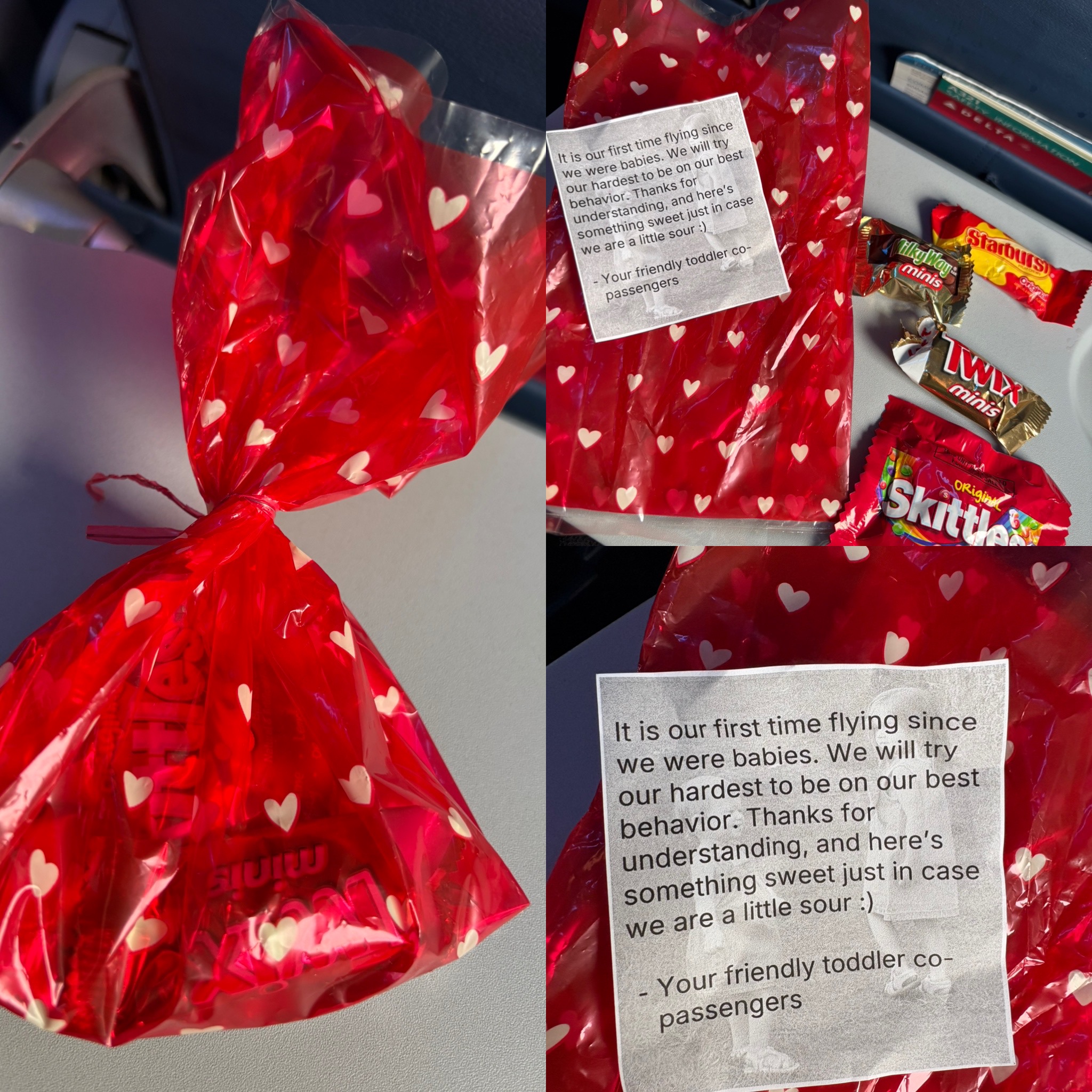
Something strange and surprising happened to me on a flight recently: I received a little bag containing wrapped candies and a note, “It is our first time flying since we were babies. We will try our hardest to be on our best behavior. Thanks for understanding, and here’s something sweet just in case we are a little sour. ~Your friendly toddler co-passengers”
I was so surprised by the gesture: The family had certainly put a lot of work into stuffing the bags for the approximately 200 passengers and crew on the flight. And I wondered, does the FAA allow passengers to hand out goodies to all the other passengers and crew? Apparently they do.
But what’s most interesting about the gesture is the way it speaks to social dynamics and reciprocity, the social glue that connects us with each other.
Reciprocity as Social Glue
Reciprocity is our instinct to give back when we get something from others. When someone does us a favor or a kindness, we’re inclined to give back. We get candy from the parents of toddlers on a plane, and we’re motivated to be more patient when the kids are disruptive. And while it’s unlikely the parents were thinking deeply about social dynamics, they were certainly leveraging the goodwill gesture to purchase a little patience from passengers.
The dynamic has been proven many times in social science research. For example, at restaurants, when servers gave candies to customers along with the check, they received bigger tips. And people were more likely to purchase raffle tickets when they were given a soft drink in conjunction with the ask. They were also more likely to report they liked the person who sold them the tickets.
Conditions Apply
But certain conditions apply as well. We’re most likely to reciprocate in work or in life when a give feels genuinely kind, rather than strategic or manipulative. We’re also more likely to give back when we feel like it’s our free choice, rather than something that is required. We also prefer a gesture to be about right in terms of its size. If we pick up the tab for coffee with our friend and they return the favor by paying for a gourmet, six-course meal, that feels inappropriate. But if we pick up coffee and they pay for our smoothie on our next get together, we’ll be more comfortable with the exchange.
We’re also most likely to give when we see giving as part of our identity (“I am the kind of person who gives back”) and when we’re affected emotionally.
Reasons to Reciprocate
There are tons of benefits to reciprocity. We experience greater wellbeing whether we’re asking for help or giving it. In addition, when we exchange support, gratitude, or favors, we build relationships, goodwill, and trust. Studies have also shown that we tend to feel greater dignity when someone gives to us, because we feel valued by them.
Reciprocity is also good for groups because it reinforces mutual obligation and the sense that we will look out for each other. And when teams reciprocate more, it tends to raise resilience because they have more to draw from with resources that are pooled and expanded by generous behaviors.
Why It Matters
How does any of this matter? I think the takeaway is that it’s just a really good idea to give and support others. We don’t need to provide gift bags to everyone on a flight, but we can help others, do favors, and express gratitude. We might directly repay the person who helped us, or we may just do the next kindness for someone else, inspiring a positive ripple across the broader community.
What are examples of when someone has contributed something to you and you’ve reciprocated? How did it affect your relationship?
Thanks for reading. I’m glad you’re here!
More on reciprocity
- Reciprocity increases trust solidarity and bonds between group members Social Psychology Quarterly
- Experiment on the effects of giving to motivate behavior and liking Journal of Experimental Social Psychology
- Research on why we give Would You Donate a Kidney to a Stranger? Why We Help Others
~~
If you’d like to read more, take a look at my books here and my articles here. You can preorder my new book, Critical Connections, here. For teams using Critical Connections, learning resources are available here.
In addition to subscribing to this LinkedIn newsletter, you can also find me via my LinkedIn profile, X, Instagram, TikTok, Goodreads, Unsplash, Forbes, and Amazon.